Zero Trust Network Access
Provide secure access to anyone, anywhere. Access follows identity, not IP addresses, on a need-to-know, least-privilege basis. We run it 24/7 with Level-3 engineers, on 35 years of operational baseline.
Never trust, always verify.
ZTNA stands for Zero Trust Network Access, a security framework that shifts the focus from traditional perimeter-based security to a more holistic approach, where every user, device and network connection is treated as untrusted by default. The main principle of ZTNA is "never trust, always verify," which means that each access request must be authenticated, authorized and continuously validated before granting access to resources or data.
Zero Trust Network Access architecture follows an adaptive trust model, operating on a need-to-know, least-privilege basis.
Under ZTNA, only authenticated and authorized users, endpoints and applications are granted access to corporate resources. Access is centrally managed, policy-based and granular, ensuring flexibility and security.
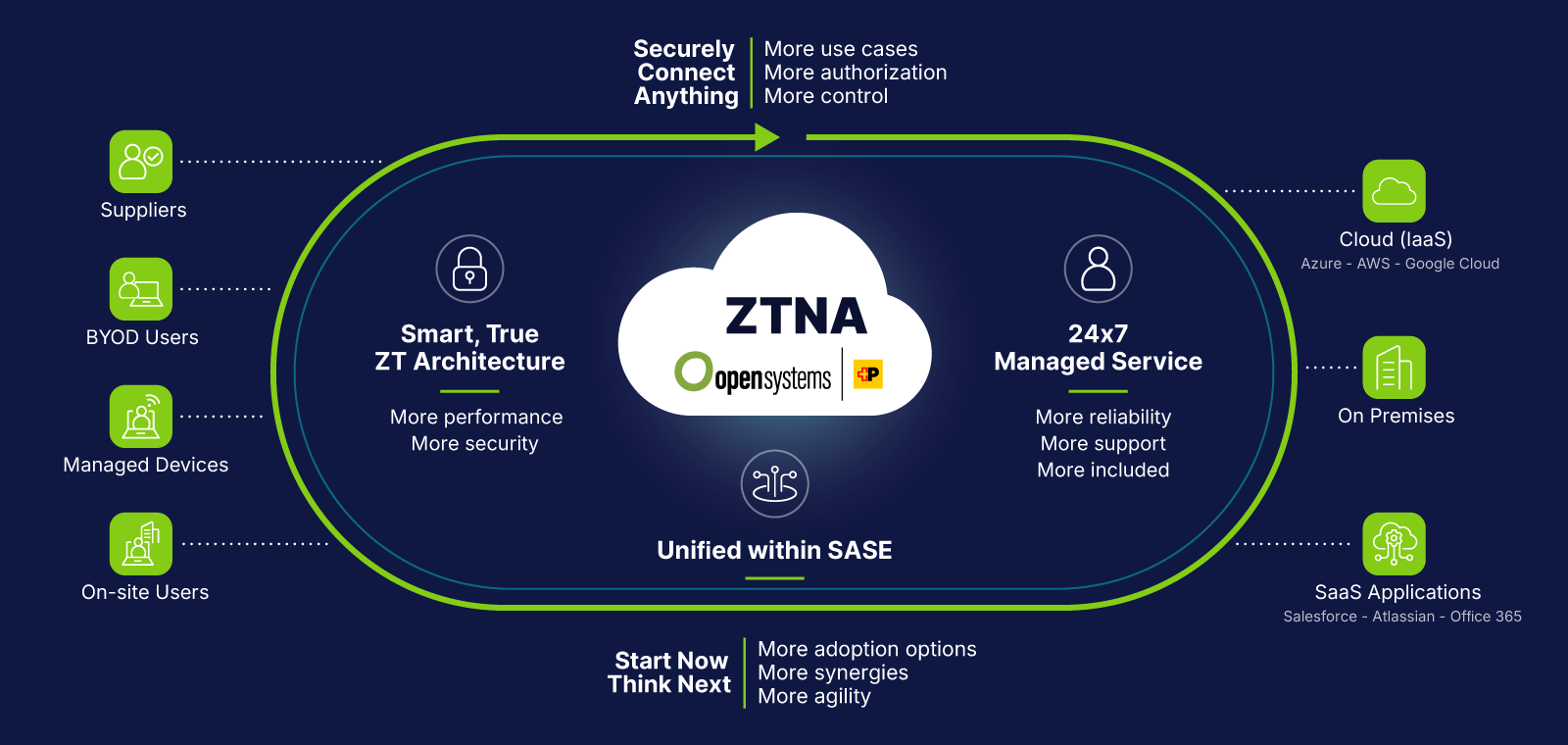
Benefits.

Connect everything securely
ZTNA provides flexible and secure access to users, sites and partners using any device, anywhere in the world.

ZTNA cloud
We offer integrated, smart routing via cloud-based ZTNA PoPs, ensuring higher performance.

True zero trust architecture
By separating identity provider, traffic routing and ZTNA, the impact of a compromise can be minimized.

24/7 fully managed service
Delivered with every capability you need to start using it today, operated by Level-3 engineers. No L1, no L2.
Serve every user, reach every app.
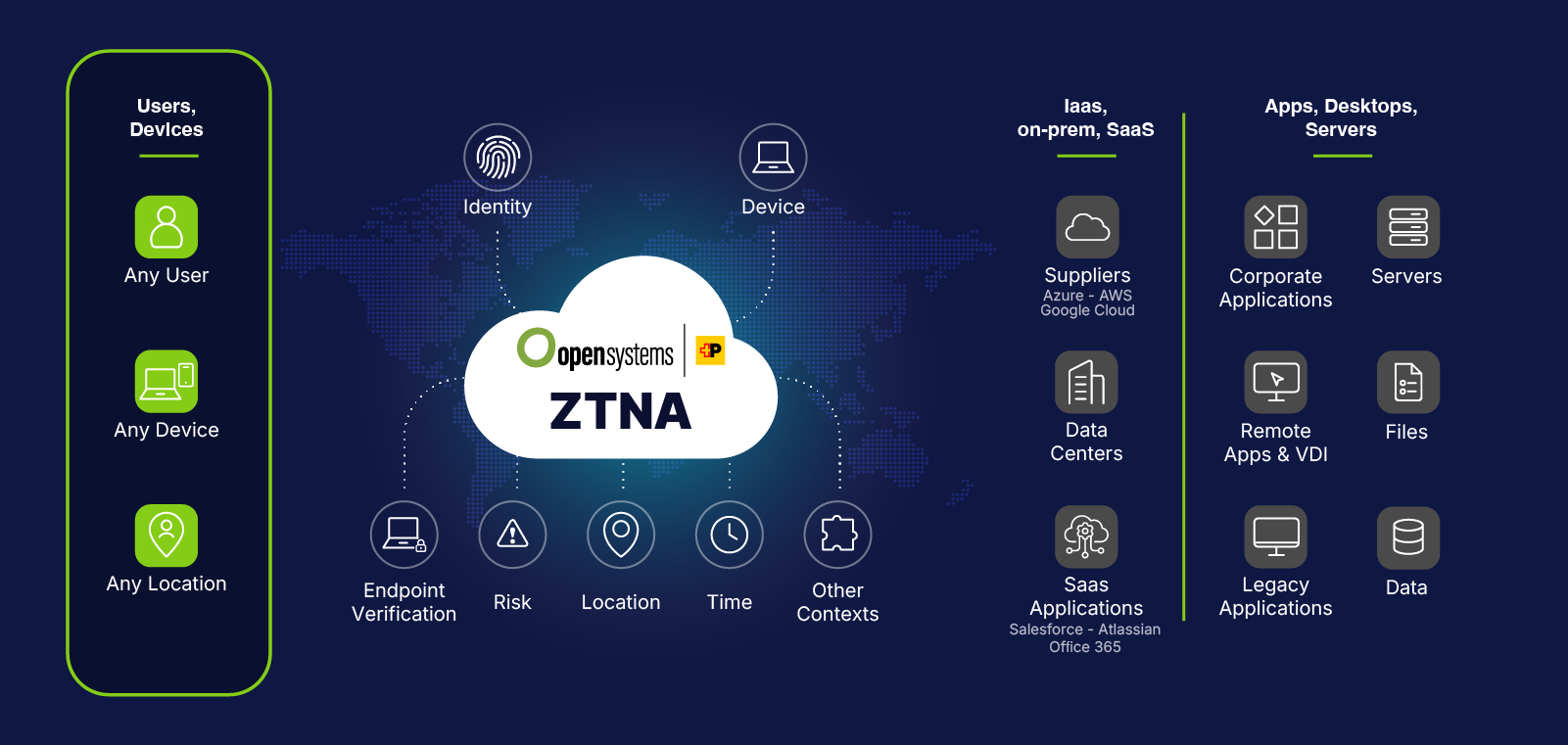
Serve every user
- Agentless or agent-based, to include any type of user
- For agent-based: enforce encryption on all incoming traffic via ZTNA by adding a Secure Web Gateway
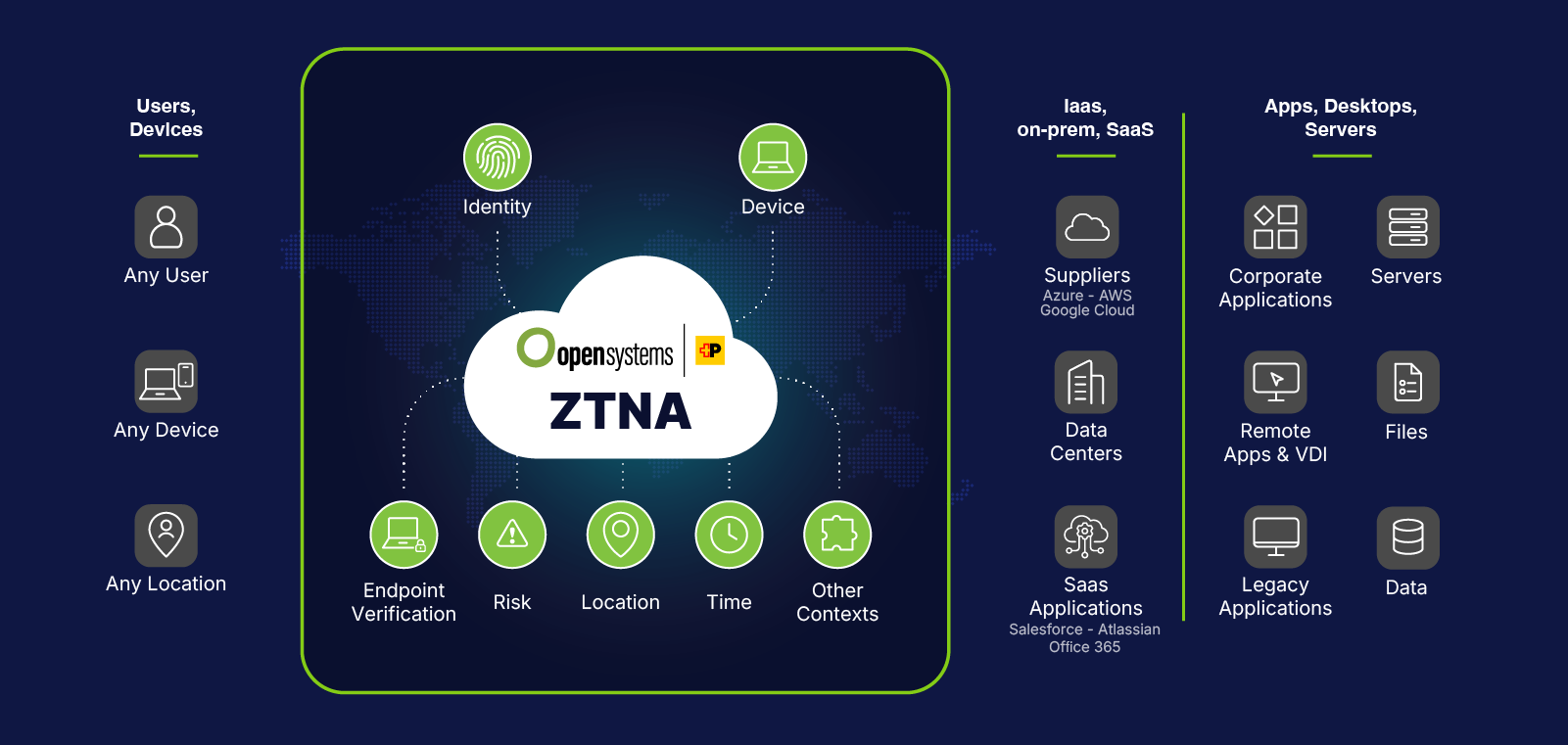
A range of policy options
- Enrich authentication using credentials, certificates and MFA
- Set policy by factors including user group, device posture and NDR-provided risk score
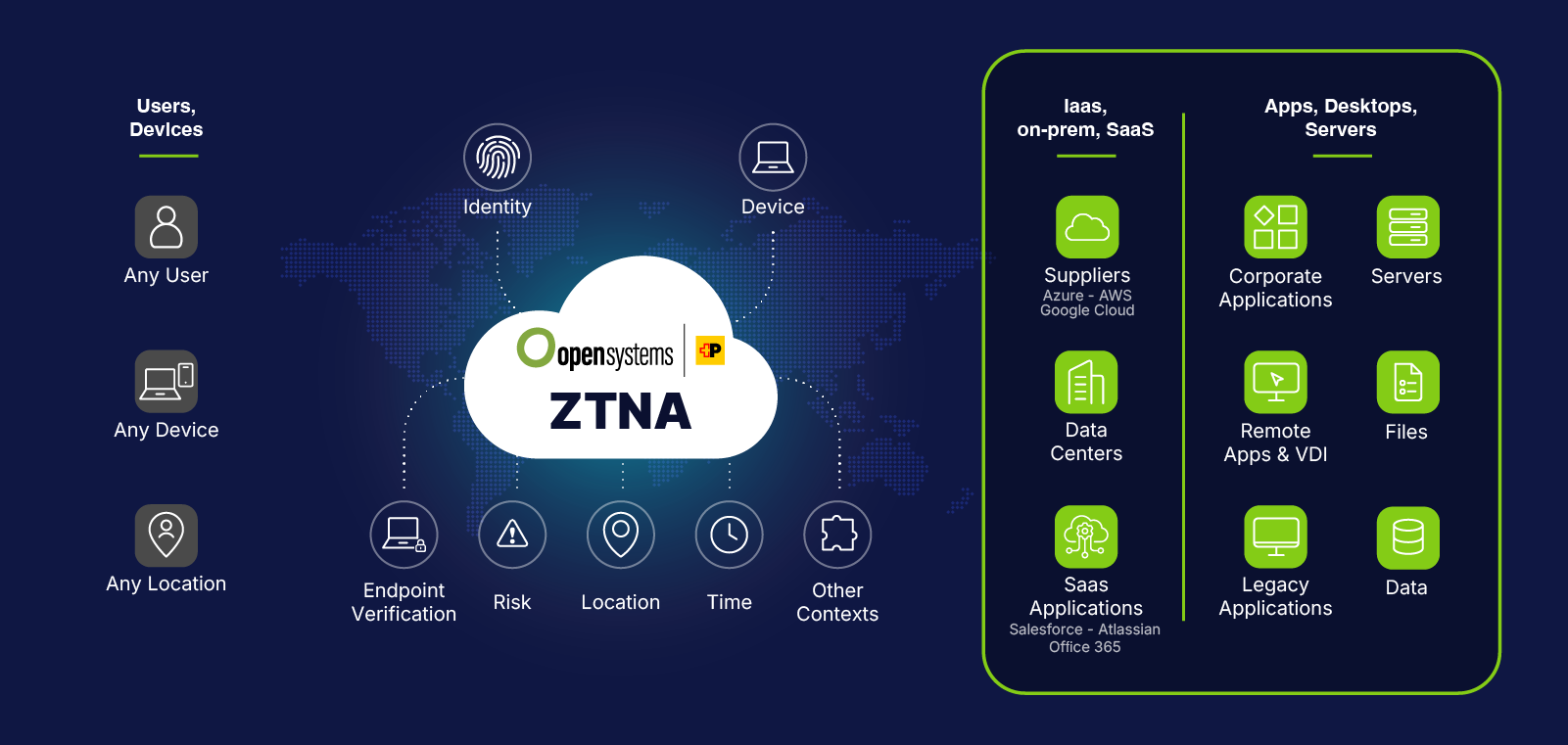
Access all applications
- Ensure short paths and place enforcement points near your apps
- Control access to corporate SaaS, cloud-based and on-premises applications
Why ZTNA replaces the VPN.
ZTNA and VPNs (Virtual Private Networks) are both technologies that enable secure remote access to organizational resources. However, they differ in their approach, architecture and security principles.
Trust model
ZTNA operates on a "never trust, always verify" principle, so each access request must be authenticated, authorized and continuously validated. VPNs establish a secure tunnel to the network, and once a user is connected they are often granted broad access to resources.
Access control
ZTNA enforces granular, context-aware access policies based on user identity, device and other factors. Access is granted on a need-to-know basis and limited to specific applications. VPNs provide network-level access, which can expose a larger attack surface.
Lateral movement
ZTNA eliminates the possibility of lateral movement by granting access solely to necessary resources. VPNs often provide access to the full internal network, which attackers could exploit.
User experience
ZTNA grants access to specific applications without a full network connection, for a more seamless experience. VPNs require connecting to the corporate network first, which can be slower and more cumbersome.
Scalability and performance
ZTNA is typically more scalable and handles many users and connections more efficiently than traditional VPNs, which matters in cloud-based or distributed environments where traffic and locations change rapidly.
Deliver network and security in the cloud.
Integrate Open Systems ZTNA with our cloud-based Managed SASE service for maximum protection. Begin your SASE journey with ZTNA and add our other services, Secure Web Gateway, Mobile Entry Point, Firewall and CASB, as needed. Manage all of them from a unified interface.
ZTNA is available as a stand-alone product or as an add-on to any of our Managed SASE service plans. Our plans combine 24/7 Level-3 expertise focused on connecting and protecting users, apps, sites and clouds, all unified on an intelligent platform running on 35 years of operational baseline.

Questions about ZTNA.
Do our users have to install an agent?
Does ZTNA only work for SaaS, or also for our own applications?
What happens if a device stops being trustworthy mid-session?
Do we have to replace our identity provider?
How do contractors, partners and integrators get access?
Can we start with ZTNA and add the rest later?
Go deeper.

Leave complexity behind.
See how Open Systems runs ZTNA and the full SASE Experience for your organization. Talk to a specialist.
Contact us →